
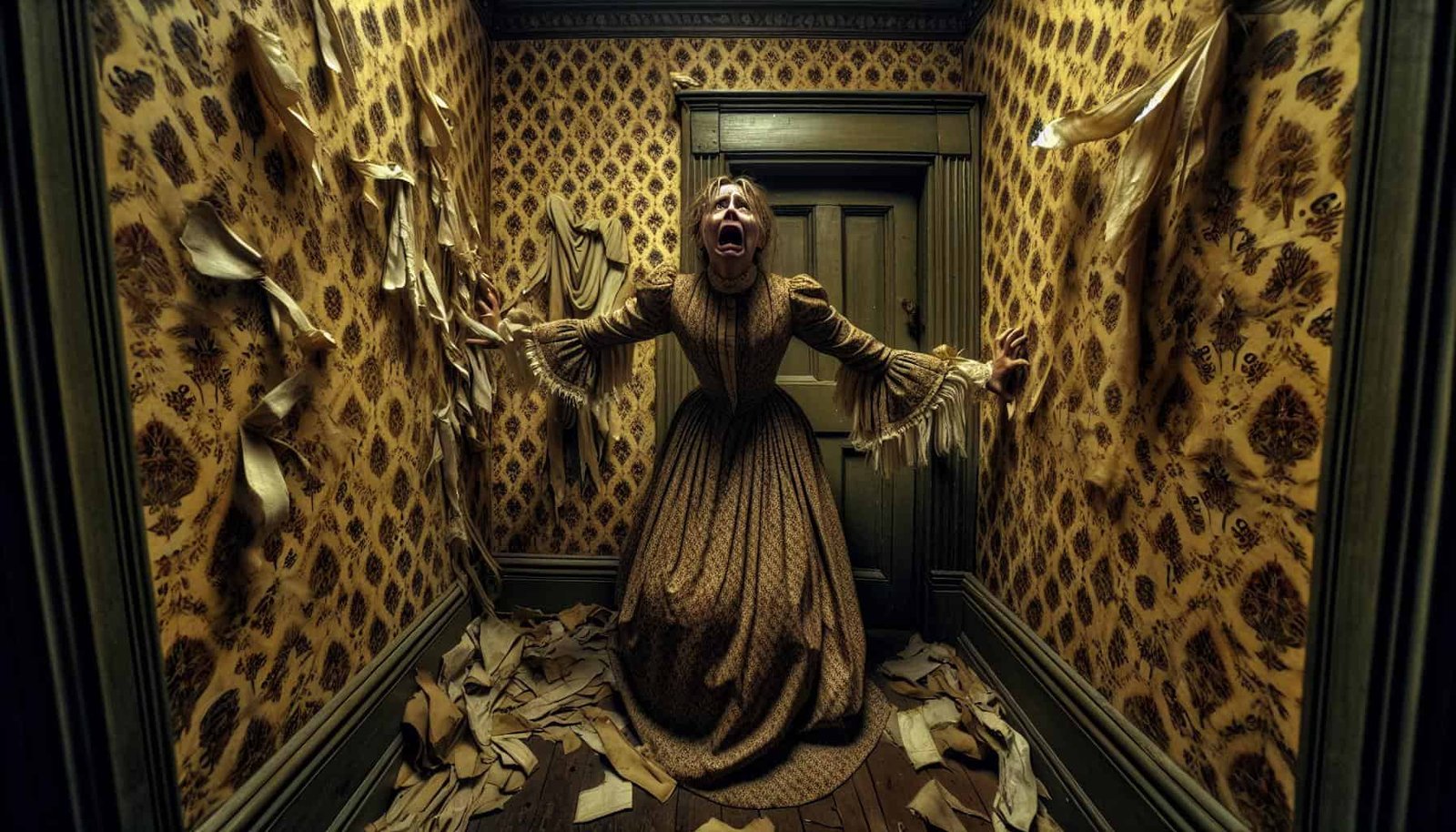
Overview of ‘The Yellow Wallpaper’
“The Yellow Wallpaper” captivates with its exploration of mental health and societal constraints. The short story, penned by Charlotte Perkins Gilman, focuses on a woman’s descent into madness while confined in a dreamy yet oppressive space. The narrative unfolds through journal entries, revealing her inner turmoil and gradual obsession with the yellow wallpaper in her room.
Gilman’s work criticizes the 19th-century treatment of women, illustrating how societal expectations restrict personal freedom. The wallpaper becomes a powerful symbol of entrapment, reflecting the protagonist’s struggle against imposed norms. As she projects her feelings onto the wallpaper’s chaotic patterns, it mirrors her deteriorating psyche.
The story resonates with readers familiar with the suffocating pressures of conformity. You might see parallels between her struggle and those faced by individuals today, making this tale timeless. The rich symbolism and intricate themes invite you to investigate deeper into the emotional world of the narrative.
I suggest you read 7 gothic heroines who broke all the rules and defied norms
By recognizing the multiple layers in “The Yellow Wallpaper,” you uncover profound insights into identity and independence. Each element, from the setting to the wallpaper itself, contributes to a narrative that echoes the spirit of Dark Academia. Explore more about the themes, symbols, and literary techniques in Gilman’s work by checking out other articles on Dark Academia Codex.
Themes Explored
“The Yellow Wallpaper” intricately weaves multiple themes that resonate deeply with contemporary readers. These themes highlight the societal challenges and psychological struggles of the protagonist, creating a powerful narrative that advocates for mental health and gender equality.
Mental health and society
Mental health stands at the forefront of the narrative, illustrating the protagonist’s gradual descent into madness. The confinement in a room reflects not just physical imprisonment but also emotional and psychological constraints imposed by societal expectations. As you follow her journey through journal entries, the depiction of her mental deterioration raises critical questions about the treatment of women and mental illness in the 19th century. The wallpaper transforms into a symbol of her entrapment, mirroring her chaotic thoughts and emotions. This poignant exploration urges a dialogue about mental health awareness, emphasizing the importance of understanding and compassion towards those facing similar struggles today.
I suggest you read Secrets hidden in gothic castle architecture revealed here
Gender roles
Gender roles play a significant role in “The Yellow Wallpaper,” critiquing the oppressive structures of the time. The protagonist’s experience underscores the limitations imposed on women, who often sacrificed their identities to adhere to societal norms. Her husband, a physician, embodies the male-dominated power dynamics that devalue women’s voices and experiences. The wallpaper itself becomes a canvas upon which she projects her frustrations, symbolizing her desire for freedom and self-expression. By breaking away from these restrictive roles, she seeks autonomy and defiance against conformity. So, Gilman highlights the essential need for gender equality, making this story a timeless reflection on women’s rights.
Explore the profound insights of this narrative and reflect on its relevance in your understanding of mental health and gender dynamics by engaging with more content on Dark Academia Codex.
Symbolism in the Story
Symbolism plays a pivotal role in “The Yellow Wallpaper,” enriching its themes and deepening your understanding of the characters’ struggles. Key symbols reflect the protagonist’s entrapment and the societal expectations that confine her.
I suggest you read The dark side of Jane Austen you never knew about revealed
The yellow wallpaper itself
The yellow wallpaper serves as a multifaceted symbol of the protagonist’s mental deterioration and the constraints imposed by society. Its chaotic patterns represent her tangled thoughts and feelings of confinement. As she becomes more fixated on the wallpaper, it mirrors her descent into madness, showcasing how external pressures can seep into one’s psyche. The act of peeling away the wallpaper reflects her desire for liberation. Each strip represents a step toward reclaiming her identity, even if it leads to darker realizations. The vibrant yet oppressive color of the wallpaper becomes a constant reminder of the struggle against societal norms that dictate her existence. You can sense the emotional weight behind each layer she uncovers, turning the wallpaper into a canvas of her internal battle.
The room as a metaphor
The room in which the protagonist is confined symbolizes a broader societal cage. Initially, it seems like a sanctuary, where she can rest and recuperate. Instead, it becomes a prison that stifles her creativity and autonomy. The barred windows and the locked door signify the restrictions imposed by her husband and society at large. As she explores the room, it transforms into a reflection of her mental state, filled with barriers that prevent her from fully engaging with herself and her desires. The isolation within the room highlights the struggles many women face against patriarchal forces during the 19th century. The four walls close in, representing not just physical confinement but emotional and intellectual suppression. This metaphor urges you to consider the plight of those trapped within societal expectations, prompting a deeper conversation about mental health and self-identity.
Explore more themes and symbols by diving into the rich world of Dark Academia Codex. Each section holds treasures of knowledge, waiting for you to unveil.
Historical Context
Understanding the historical context behind “The Yellow Wallpaper” enriches your reading and appreciation of Gilman’s work. The late 19th century marked a period where societal expectations and gender roles significantly restricted women. Often, literature reflected these oppressive norms, serving both as commentary and critique.
The treatment of women in literature
In the area of literature, women frequently portrayed subservient roles, underscoring a prevailing narrative that limited their identity to domestic spheres. Think of classic works that echoed this sentiment, where women’s desires and struggles remained largely ignored. Through the confines of these narratives, Gilman’s story stands out, illuminating the mental and emotional strife that women faced. It articulates a powerful protest against the silencing of female voices and insists on the need for a re-examination of women’s roles in both society and literature. These themes resonate strongly with the aesthetics of Dark Academia, which celebrates critical engagement with classical texts and art.
Influence of the author’s life
Gilman’s own experiences shaped her writing significantly. Her struggle with postpartum depression and the oppressive “rest cure” prescribed by her physician husband provided the backdrop for her narrative. These assumptions about women’s mental health reveal broader societal issues. Through writing, Gilman expressed her frustration, using the wallpaper as a metaphor for her confines and the expectations imposed upon her. By revealing these personal struggles, she echoed a very real dialogue about women’s rights and mental health that remains relevant today.
Dive deeper into the intricate layers of “The Yellow Wallpaper” by exploring more content on our site. Discover articles that analyze literature, embrace the beauty of academic life, and celebrate the themes that connect past narratives to contemporary discussions.
“The Yellow Wallpaper” invites you to reflect on the complexities of mental health and the societal constraints that can stifle individuality. As you immerse yourself in the protagonist’s journey, you might find echoes of your own experiences with confinement and the struggle for autonomy.
Gilman’s powerful narrative encourages a deeper understanding of the challenges faced by women throughout history and today. By engaging with her story, you’re not just exploring literature; you’re joining a vital conversation about freedom, identity, and the importance of mental health awareness. So keep the dialogue going and let the themes of this story inspire your own journey toward understanding and compassion.
