
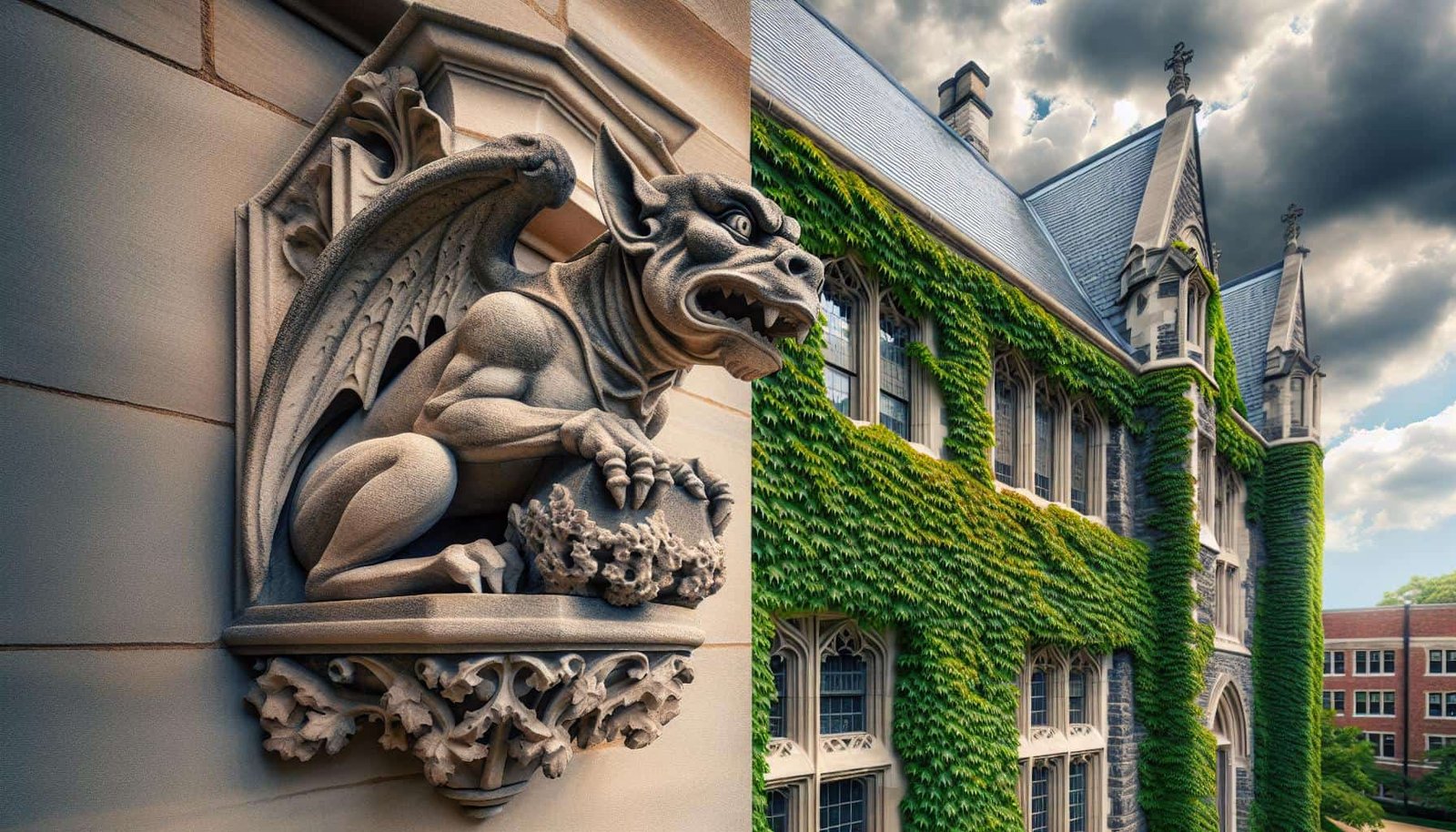
Overview of Gargoyles and Grotesques
Gargoyles and grotesques on Ivy League facades offer a compelling glimpse into architectural history. These figures aren’t just ornamental; they serve as iconic symbols within the Dark Academia Codex, representing the intertwining of artistry and scholarship.
Gargoyles, often adopted for their functional role as water spouts, showcase intricate designs that depict animals or human-like figures. These chiseled creatures redirect rainwater away from building walls, preventing erosion. Their dramatic visages evoke curiosity, drawing your eyes upward as you traverse historic campuses.
Grotesques, on the other hand, captivate with their fantastical shapes and whimsical forms. Unlike gargoyles, they lack drainage purposes and emphasize artistic creativity. These enigmatic figures range from exaggerated faces to mythical beasts, embodying the rich narratives of scholars who walked the same grounds you explore today.
I suggest you read Unveiling the occult symbols in Yale’s Sterling Memorial Library
Both elements serve to spark fascination and reflection on the broader themes of knowledge, morality, and the passage of time. You’ll find that each stone carving tells a story, rooted in the aspirations and follies of past students and intellectuals.
As you admire the craftsmanship, you’ll discover connections to classical literature and the pursuit of wisdom. Each figure invites you to unravel the secrets of Dark Academia, opening pathways to deeper understanding.
Explore more about the enchanting world of gargoyles and grotesques on our site. Jump into other sections and blog posts that investigate into the rich aesthetic that defines Dark Academia.
I suggest you read Why Harvard’s Memorial Hall is the perfect dark academia backdrop
Historical Significance
Gargoyles and grotesques hold a vibrant connection to both art and history, showcasing the grandeur of Ivy League institutions. These intricately designed figures narrate stories that resonate with the ideals of Dark Academia, embodying a celebration of knowledge and creative expression.
Origins in architecture
Gargoyles originated in ancient architecture, primarily serving a functional purpose as water drainage systems. Their architectural evolution took off during the Gothic period, especially in the cathedrals of France. These remarkable features combined utility and artistry, often depicting animals and mythological figures that communicated moral lessons and warnings. In Ivy League campuses, the incorporation of gargoyles reflects a romanticized view of learning, linking students to the past through these symbolic sculptures. Each carving invites you to investigate into history, reminding you of the scholarly pursuits that shaped academia’s traditions.
Cultural influences
Cultural influences on gargoyles and grotesques stem from various artistic movements, intertwining with the ideals of Dark Academia. They draw from classical literature and folklore, often referencing philosophical themes that resonate with the human experience. Gothic literature, with its intrigue and complexity, plays a significant role in inspiring these designs. You can see how these figures act as guardians of knowledge, reflecting scholarly values that promote a quest for understanding. As you walk under their watchful gazes, appreciate how these elements connect you to a rich heritage that honors the legacy of thinkers and artists. Explore the main sections of Dark Academia Codex to uncover more fascinating insights into how these iconic features contribute to the captivating world of academic life.
I suggest you read Secret societies and their hidden architectural clues into the light
Design Elements of Ivy League Facades
Ivy League facades embody a wealth of intricate design elements, notably seen in their gargoyles and grotesques. These figures not only enhance the architectural beauty but also reflect deeper themes and meanings, inviting you to investigate into a captivating world.
Common themes
Common themes permeate the designs of gargoyles and grotesques. You’ll notice motifs that celebrate nature, humanity, and the pursuit of knowledge. For instance, animals often represent various virtues or vices. Meanwhile, the whimsical characters echo the complexity of human emotions and intellect. This synergy aligns perfectly with the ideals of Dark Academia, where the quest for understanding dominates. Each figure might whisper stories of past scholars, evoking a sense of nostalgia. As you explore, consider how these themes resonate with your own academic journey, encouraging contemplation and reflection.
Symbolic meanings
Symbolic meanings run deep within these architectural adornments. Gargoyles, serving as both guardians and functional water spouts, symbolize protection over the buildings and their inhabitants. Their fierce expressions ward off negativity, echoing a commitment to safeguarding knowledge and academic integrity. Grotesques, with their playful and fantastical forms, invite intrigue and wonder. Together, they create a dialogue between the past and present, reflecting the ongoing human experience in pursuit of wisdom and creativity. This expanse of symbolism links directly to the Dark Academia Codex, emphasizing the importance of illumination through classical learning. Jump into this rich world as you discover more about the stories behind these fascinating figures.
Explore the site’s main sections and blog for more insights into the enchanting world of Dark Academia.
Famous Ivy League Examples
Ivy League campuses feature some of the most stunning architectural examples of gargoyles and grotesques. These intricate elements invite you to investigate deeper into the storied past of these prestigious institutions.
Notable buildings
Harvard University showcases remarkable gargoyles on buildings like the Widener Library. These sculptures embody both artistry and function, channeling water away while resembling mythical creatures. Columbia University’s Low Memorial Library delights visitors with its elegantly designed grotesques, presenting whimsical figures that spark curiosity. Yale’s Sterling Memorial Library stands out with its striking stone carvings, many depicting animals and scholars, representing the intersection of knowledge and creativity. Each of these notable buildings tells a story, deeply entwined with the ideals of Dark Academia, where tradition and intellectual pursuit flourish.
Distinctive features
The distinctive features of Ivy League gargoyles and grotesques reveal fascinating insights into their symbolic meanings. Gargoyles serve a dual purpose as both practical water spouts and protectors of the edifices they adorn. Conversely, grotesques symbolize the whimsical side of academia, often depicting playful faces or bizarre creatures. Commonly, these figures reflect themes from classical literature or folklore, connecting you to the rich world of historical narratives. The intricate craftsmanship highlights the artisans’ dedication, illustrating the importance of art in education. Each figure conveys unique tales, embodying the spirit of inquiry that defines Dark Academia. Explore the intricacies of these features further and enhance your understanding of their significance in academic life. For more insights, check out the main sections and blog posts on our site.
Conservation and Restoration Efforts
Conservation efforts focus on maintaining the beauty and integrity of gargoyles and grotesques on Ivy League campuses. Skilled artisans undertake meticulous work to clean and repair these stone figures, often using techniques that adhere to historical practices. This ensures that unique details remain intact, allowing you to appreciate the craftsmanship of past artisans.
Restoration projects can span years and involve extensive research. Teams analyze the materials, original designs, and even the environmental challenges that contribute to deterioration. For instance, when Yale’s Sterling Memorial Library underwent restoration, experts studied the effects of weathering on the intricate sculptures, reinforcing the idea that preserving history requires a blend of art and science.
Engagement in conservation reflects a commitment to the ideals of the Dark Academia Codex. These initiatives not only protect aesthetic beauty but also foster an appreciation for the stories behind each figure. Every restoration tells a tale of academic pursuit and creative expression, linking you back to scholars of the past.
Participation in conservation efforts often involves collaboration between universities, local communities, and heritage organizations. Events like “Gargoyles Day” gather enthusiasts and scholars together to celebrate these remarkable figures, promoting awareness and encouraging further preservation initiatives.
As you wander through the ivy-covered campuses of the Ivy League you’ll find yourself captivated by the gargoyles and grotesques that grace these historic facades. Each figure is a storyteller inviting you to uncover the rich history and artistry that shaped academia.
These intricate sculptures aren’t just architectural embellishments; they embody the spirit of Dark Academia and the pursuit of knowledge. They connect you to past scholars and dreamers, reminding you of the timeless quest for understanding.
So next time you stroll beneath their watchful gazes take a moment to appreciate the beauty and meaning behind these stone guardians. Embrace the stories they tell and let them inspire your own academic journey.
